


Micro Rotary Switch
Zhejiang Alone Electrical Co., Ltd., established in 2006, has a factory building of 10,000 square meters. It is located in Lishui City, Zhejiang Province, the beautiful "Hometown of Longevity in China". The factory is located in Shuige Industrial zone, Lishui City, a national economic development zone.The company inherits the spirit of diligence and innovation, focusing on manufacturing high-quality kitchen appliances and ancillary products, with 102 employees. Specializing in the production of "ALONE", "ALONE" brand radiant heating element, electric ceramic hob, rotary switch, gear switch, energy regulator, push knob, hidden knob, thermostat, pin holder, Mainly used for electric ceramic stoves, electric ovens, electric stoves, barbecue stoves, range hoods, frying pans, integrated stoves, electric steamers, dishwashers, household and commercial induction cookers, heaters, electric water heaters, electric heaters, air Fryers and other kitchen appliances and household appliances.

Why Choose Us
01
Our Factory
Zhejiang Alone Electrical Co., Ltd., established in 2006, has a factory building of 10,000 square meters. It is located in Lishui City, Zhejiang Province, the beautiful "Hometown of Longevity in China". The factory is located in Shuige Industrial zone, Lishui City, a national economic development zone.
02
Technical R&D Team
The company has a technical R&D team composed of many senior technical engineers, with independent R&D capabilities, scientific management, strong technical strength, advanced production equipment, and complete computer testing methods.
03
Our certifications
The products owned by the company are produced in accordance with international standards and national industry standards, and some products have been certified by CQC, CE, and TUV.
04
24H Online Service
Respond quickly to ensure you receive timely help and support to the greatest extent possible.

6 Position Rotary Selector Switch
A 6 Position Selector Switch is a switching device capable of selecting between six different positions or settings. It is widely used in many fields such as industrial automation, control systems, and mechanical equipment.

The core component of the rotary cam switch is a cam disk. When the handle is rotated, the rotation of the cam will touch the contact point of the switch, thereby realizing the on/off operation of the circuit.

The 8 position rotary switch has eight independent gears or setting options. Users can select different gears by rotating the switch to control or adjust the functions, modes or parameters of the device. This kind of switch is widely used in electronic equipment, instrumentation, control systems and other fields.

Rotary Transfer Switch is a switching device that can change the connection status of a circuit by rotating it. It is often used to switch between primary power and backup power to ensure continuity and reliability of power supply.

Two Position Rotary Switch is a high-performance electrical control device, designed with a red plastic shell and gold contacts, which is both beautiful and durable. This switch has two gears to meet the control needs of different electrical equipment. Its performance is stable and reliable, its price is reasonable, its operation is simple and easy to use, and it is deeply loved by users. In the market, two position rotary switch has won wide recognition for its excellent quality and reasonable price. If you are looking for a quality appliance control switch, two position rotary switch is your ideal choice.
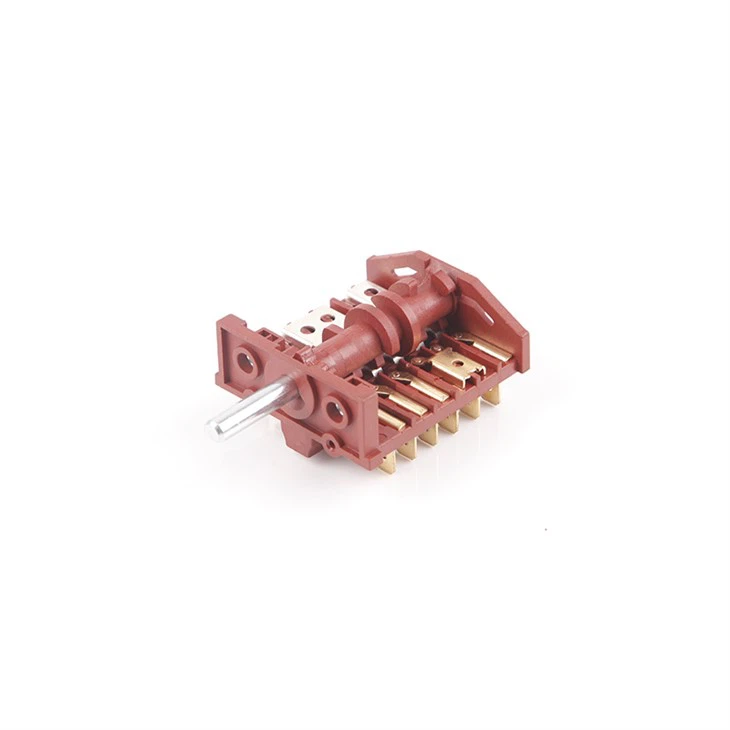
INTRODUCTION: According to different materials, the select rotary switches mainly include ceramic models, Bakelite models, and PA66 models. Among them, the ceramic rotary switch has the advantage of high temperature resistance.

Select Rotary Switch mainly consists of a rotating handle, a fixed base and internal contact points. The rotating handle allows for manual operation and the fixed base provides a stable mounting base.
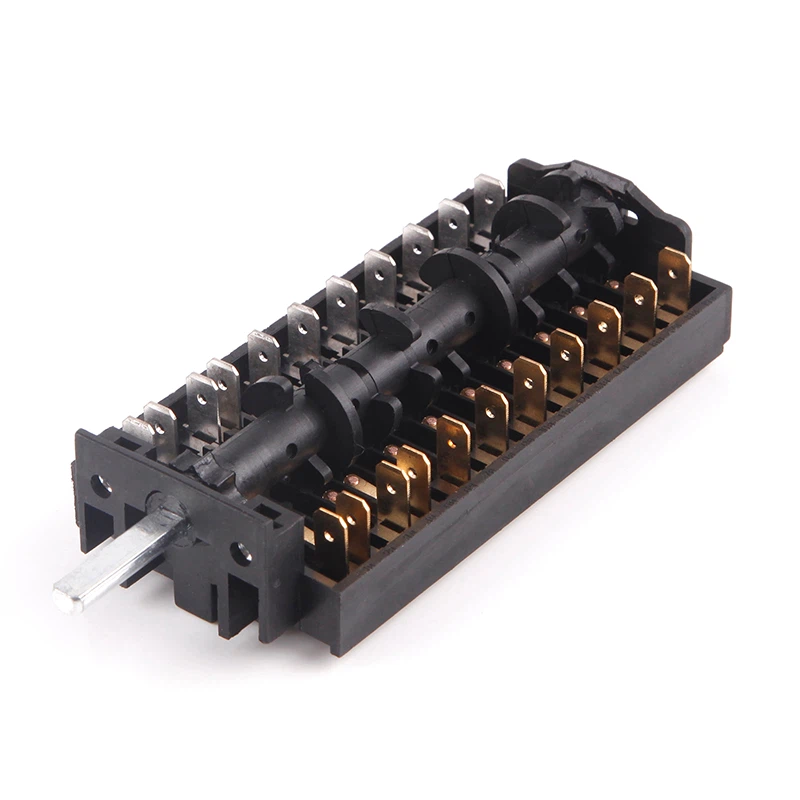
10 Position Rotary Selector Switch
The switch typically includes a rotatable portion or knob that allows the user to select different operating positions.
Each position corresponds to a specific circuit connection state, allowing the user to switch between different electrical functions.
May contain internal cam disks and movable switching elements for connecting and disconnecting electrical circuits.
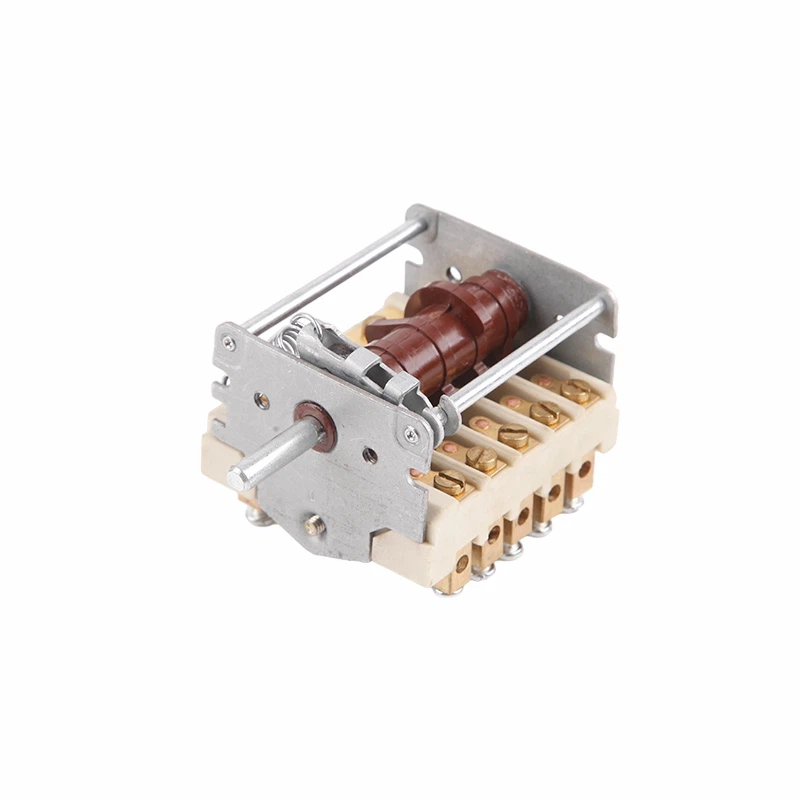
A 5 position rotary switch is an electrical switch that allows the user to select five different connections. Its working principle involves mechanical rotation to open or close an electrical circuit. Rotation of the knob or lever moves the connecting arm or scraper to a series of contacts, one for each position, thereby changing the path of the circuit.
What is Rotative Switch
A rotary switch is an essential component in many electrical and electronic devices, known for its ability to control multiple circuits with a single switch. It operates by rotating a knob or lever to different positions, each of which corresponds to a specific electrical connection. This mechanism allows users to select different outputs or settings in a device.The basic functionality of rotary switches involves a rotating contact that aligns with various stationary contacts, creating different electrical paths. When the user turns the switch, the rotating contact connects to one of the stationary contacts, completing the circuit for that particular position.
Benefits of Rotative Switch
Durable Construction
Rotary switches are engineered with robust materials to ensure longevity and resilience in demanding environments. Whether subjected to industrial settings or consumer electronics, these switches uphold durability.
Precise Positioning
With meticulous craftsmanship, rotary switches offer precise positioning, facilitating accurate selection of circuit paths or functions. This precision is vital in applications where minute adjustments are critical.
Versatile Configurations
Caters to diverse needs with rotary switches available in various configurations, including single-pole, multi-pole, and multi-position options. This versatility enables compatibility with an array of electrical systems.
Enhanced Contact Design
The contact design in rotary switches ensures low contact resistance and reliable electrical connectivity. This feature minimizes signal degradation and enhances the overall performance of the switch.
Smooth Operation
Rotary switches boast smooth and ergonomic operation, characterized by fluid rotation and tactile feedback. This user-friendly design enhances usability and operator comfort.
Customization Options
Offers customization services, allowing customers to tailor rotary switches to specific application requirements. From knob design to contact configurations, customization ensures optimal functionality.
Application of Rotative Switch
Manufacturing and automation
Rotative switch play a pivotal role in the manufacturing sector, where precision, reliability, and automation are key. These switches control a wide array of machinery, from simple conveyor belts to complex robotic assembly lines. By managing power sources and operational modes, they enable machines to perform various tasks seamlessly and switch between functions without manual intervention. This not only enhances productivity but also contributes significantly to workplace safety. Operators can safely isolate machinery for maintenance or in emergency situations, minimizing the risk of accidents and equipment damage. The adaptability of rotative switch to specific manufacturing requirements, such as resistance to dust and mechanical vibrations, makes them indispensable in the automation industry.
Energy and power distribution
In the energy sector, rotative switch are crucial for the smooth operation of power distribution systems. They ensure a stable and consistent energy supply by controlling generators, switching between main and backup power sources, and managing load distribution. This is particularly important in areas prone to power outages or in critical facilities like hospitals and data centers, where power reliability is non-negotiable. By facilitating seamless transitions between different power sources, rotative switch help maintain essential services and prevent the potential chaos associated with sudden power failures.
Marine and aerospace
The demanding conditions of marine and aerospace environments require components that are not only precise but also extremely durable. Rotative switch meet these requirements, providing reliable control over various systems such as navigation, propulsion, and communication in ships and aircraft. Their robust design ensures they can withstand harsh conditions, including high humidity, saltwater exposure, and extreme temperatures, without compromising performance. This reliability is paramount in scenarios where failure or inaccuracies could lead to critical consequences, emphasizing the importance of rotative switch in ensuring the safety and efficiency of marine and aerospace operations.
How to Use a Rotary Switch Effectively
Shaping
Rotary tools can be used to shape or carve small pieces of wood or drill small holes in electrical outlets. Rotary tools that are smaller can be used to carve hard-to-reach places.
Polishing
These tools can also be used for polishing and sanding; they are mostly used by carpenters to sand down wood. You can use it to remove rust from door handles, bathroom taps faucets and kitchens, or polish jewellery.
Engrave
You can use a rotary tool to imprint your name or the name of a loved one on metal or a wooden plaque.
Cutting
Rotary tools can be used to cut metal or wood. There is a range of cutters, such as high-speed cutters which can be used to cut away nails and screws.
How to Choose Rotative Switch
Choice of the number and type of contacts
Choose a rotary switch with different numbers of contacts such as single pole, double pole, three pole or four pole according to the requirements of the circuit design. The contact material can be selected from silver alloy, copper silver plating, gold plating, etc. to meet different use environments and life requirements.
Evaluation of load capacity and electrical characteristics
It is necessary to evaluate the current, voltage, power and other parameters that the rotary switch needs to switch in actual applications, and select a model that meets the load requirements. At the same time, electrical performance indicators such as contact resistance, insulation resistance, and withstand voltage should be considered.
Consideration of installation method and overall size
According to the structural layout of the equipment, choose a suitable installation method, such as panel installation, PCB board installation, etc. At the same time, it is necessary to consider whether the overall size of the rotary switch matches, and whether the size and style of the operating knob meet the usage requirements.
How to Maintain Rotative Switch
To ensure the longevity and reliability of rotative switch, regular inspection and cleaning are essential. Periodic checks help identify wear and tear or potential issues before they escalate into major failures. Cleaning is equally important, as accumulated dirt and debris can impair switch performance and lead to overheating or electrical faults. By maintaining a schedule for inspection and cleaning, businesses can avoid unexpected downtime and extend the life of their switches, contributing to smoother operations and enhanced safety.
Load ratings are a critical consideration for the safe and effective use of rotative switch. These ratings define the maximum current and voltage the switch can safely handle. Using a switch beyond its rated capacity can lead to overheating, electrical fires, or even catastrophic failures. Therefore, it is vital to select switches with appropriate load ratings for the application and to regularly review electrical loads to ensure they remain within safe limits. This not only protects the switch but also ensures the overall safety of the electrical system it controls.
The complexity of modern electrical systems often necessitates professional installation and repair of components like rotative switch. Expert handling ensures that switches are correctly configured and integrated into the system, reducing the risk of errors that could lead to malfunctions or safety hazards.professionals are also adept at identifying and rectifying potential issues during installation or maintenance, ensuring that switches operate safely and efficiently. Seeking professional assistance for the installation and ongoing maintenance of rotative switch is a prudent investment in the reliability and safety of electrical systems. It is an essential part of rotative switch guide.
Factory Pictures

Certificate

FAQ
Hot Tags: Micro Rotary Switch, China Micro Rotary Switch manufacturers, suppliers, factory, rotary cam switch, 5 position selector switch, 3 position rotary switch, cam selector switch, select rotary switch, rotative switch
You Might Also Like


Send Inquiry