


Potentiometer Knob
Zhejiang Alone Electrical Co., Ltd., established in 2006, has a factory building of 10,000 square meters. It is located in Lishui City, Zhejiang Province, the beautiful "Hometown of Longevity in China". The factory is located in Shuige Industrial zone, Lishui City, a national economic development zone.The company inherits the spirit of diligence and innovation, focusing on manufacturing high-quality kitchen appliances and ancillary products, with 102 employees. Specializing in the production of "ALONE", "ALONE" brand radiant heating element, electric ceramic hob, rotary switch, gear switch, energy regulator, push knob, hidden knob, thermostat, pin holder, Mainly used for electric ceramic stoves, electric ovens, electric stoves, barbecue stoves, range hoods, frying pans, integrated stoves, electric steamers, dishwashers, household and commercial induction cookers, heaters, electric water heaters, electric heaters, air Fryers and other kitchen appliances and household appliances.

Why Choose Us
01
Our Factory
Zhejiang Alone Electrical Co., Ltd., established in 2006, has a factory building of 10,000 square meters. It is located in Lishui City, Zhejiang Province, the beautiful "Hometown of Longevity in China". The factory is located in Shuige Industrial zone, Lishui City, a national economic development zone.
02
Technical R&D Team
The company has a technical R&D team composed of many senior technical engineers, with independent R&D capabilities, scientific management, strong technical strength, advanced production equipment, and complete computer testing methods.
03
Our certifications
The products owned by the company are produced in accordance with international standards and national industry standards, and some products have been certified by CQC, CE, and TUV.
04
24H Online Service
Respond quickly to ensure you receive timely help and support to the greatest extent possible.
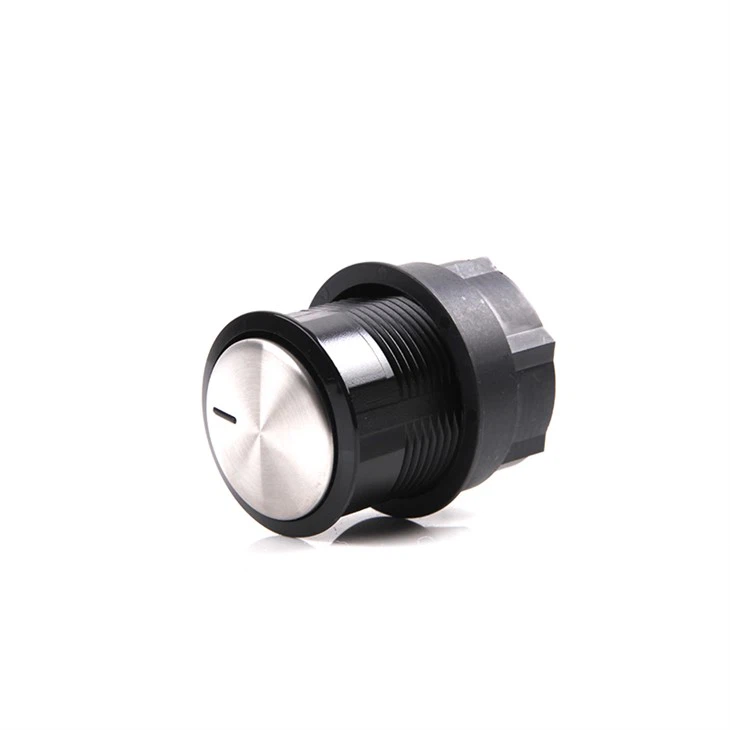
The rotary switch knob is the starting part of the rotary switch and the connection interface between the operator and the opening and closing mechanism.Rotary switch knob allows the user to select different operating modes or set parameters through a rotating motion.

Rotating Knob is usually a round component, and users can change its position through the rotation of fingers or palms to adjust device parameters. This design is widely used in many fields, such as audio equipment, video equipment, home appliances, industrial control, etc.

Rotating Switch Knob usually consists of the knob part, the switch body and the fixing base. The knob part is a component directly operated by the user, and the switch is controlled through rotation. The switch body contains elements such as contacts and springs, which are used to switch on and off the circuit or adjust parameters. The mounting base is used to fix the switch on the device or panel.

Control knobs are widely used in home appliances.The black part of the knob head and the decorative ring (external thread) are made of PC, the nut (internal thread/base) is made of PBT, and the panel is made of stainless steel 304.

In control equipment or instruments, knobs are usually used for rotational adjustments, while push may be used to activate, select, or switch a certain state. Therefore, "push knob" refers to a design that allows the user to adjust parameters by turning the knob and perform additional operations by pushing on a part of the knob, such as selecting menu items, confirming settings, or switching modes.
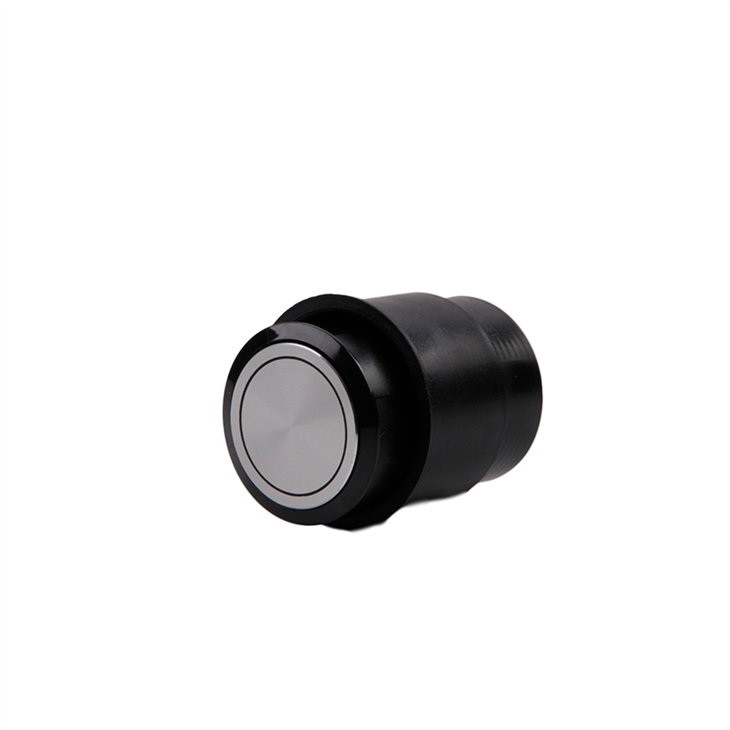
Aircon Knob usually refers to the rotating part on the air conditioning control panel used to adjust air conditioning settings (such as temperature, wind speed, wind direction, etc.). These knobs allow users to easily adjust the working status of the air conditioner by rotating it to meet different comfort needs.

Oven Control Knob is mainly used to adjust oven temperature, baking time, function mode and other parameters.It is widely used in home kitchens, commercial kitchens and industrial ovens to ensure that users can accurately control the operating status of the oven as needed.

Timer Knobs are an important part of the timer interface. By rotating these knobs, users can easily set the desired time delay, period or one-time timing task. They are widely used in various scenarios that require precise time control, such as kitchen timers, industrial control equipment, audio mixers, etc.
What is rotary switch knob
Rotary Switch Knob can be explained relatively easily. Many devices and circuits require switches with multiple available positions, to select different electrical circuits or states within a device. As the name suggests, they move between these positions via rotation.As conventional switches can normally access only two positions (e.g. on or off), complex configurations or devices might require multiple switches. A rotary switch provides a simpler, all-in-one solution.
Benefits of rotary switch knob
Multiple positions
The primary advantage of rotary switch knob is their ability to access multiple positions, making them suitable for devices with multiple functions. Instead of using separate push button switches for each function, a single rotary switch can provide a simpler and more streamlined solution.
Compact design
Rotary switch knob are generally compact in size, which is especially beneficial for space-constrained applications where minimizing the number of components is crucial.
Easy operation
The rotating mechanism of rotary switch knob offers intuitive operation and precise control, allowing users to select the desired function easily.
Enhanced durability
Rotary switch knob are known for their durability and reliability, as their rotary contacts are less prone to wear and tear compared to push button switches.
Features of Rotary Switch Knob
● Choose packages of either two or ten caps/knobs of the same type
● White pearlized inlay
● Fits all classic accents brand pushbutton dimmers
● Knobs in photo: Left is single pole cap, middle is rotary dimming knob, right is 3-way cap
● Button caps for on/off buttons on single pole dimmers (regular width or trimmed, s90dm, s90dm6) - square shafts; 9/16" Tall x 1/2" Diameter
● Button caps for on/off buttons on 3-way dimmers (regular width or trimmed, s93dm, s93dm6) fit small round shafts; 1/2" Tall x 1/2" Diameter
● Rotary dimming knobs with ridged sides for all classic accent dimmers listed above) fit a 1/4" 8.Round shaft; 3/4" Tall x 1/2" Diameter
● Use for replacing missing caps on dimmers only
● Note: Replacement knobs are not available for regular switches - if knobs are missing/broken the switch must be replaced

Application of rotary switch knob
Industrial Machinery
Rotary Switch Knob find extensive use in industrial machinery for controlling various parameters such as speed, temperature, or pressure. They offer operation and precise control, making them ideal for applications in manufacturing, automation, and process control systems.
Consumer Electronics
From audio equipment to home appliances, Rotary Switch Knob are commonly found in consumer electronics. Their tactile feedback and ease of use enhance the user experience, allowing for convenient adjustment of volume, settings, or modes.
Medical and Laboratory Equipment
In medical and laboratory settings, Rotary Switch Knob are essential for controlling critical functions, such as adjusting instrument parameters or selecting operating modes. Their reliable performance and ergonomic design make them suitable for precise and repetitive tasks.
Automotive Applications
Rotary Switch Knob are also utilized in automotive systems for functions like adjusting climate control settings, audio volume, or navigation inputs. Their durability, ease of operation, and integration with vehicle dashboards make them a preferred choice in automotive design.
Appliances and HVAC Systems
Household appliances and HVAC (Heating, Ventilation, and Air Conditioning) systems often incorporate Rotary Switch Knob for controlling temperature, fan speed, or timer settings. The simplicity of Rotary Switch Knob make them user-friendly for everyday applications.
How to choose Rotary Switch Knob
Short Handle
This selector switch has a short handle, so its operating is somewhat difficult. These switches are available at a reasonable price.
Long Handle
This switch has a long handle so it can be operated easily. As compared to the short handle type, these switches are very expensive.
Key Operated
This type of selector switch is mainly used for security-related issues. In this switch, the knob can be removed from different positions. So once it is removed then any action cannot be done. These switches are built-in with a lock to increase operating safety, The switching operation can be activated only when a person carries the corresponding key.
Position
This kind of Rotary Switch Knob in between three electric circuits. So this switch can be mainly used to choose any of two sets of contacts otherwise to separate both sets of contacts. So, it can be momentary or maintained.

Let's look at how Rotary Switch Knob work. Despite the different designs and configurations available, they all have the same fundamental design - a spindle or rotor with a protruding spoke. As the spindle revolves within its shaft, the spoke moves into different positions, contacting the electrical terminal in each and activating the attached circuits or changing an electrical state (e.g. from on to off). These circuits travel through a circular component called a wafer. Multiple circuits may be attached to a single position.
Most Rotary Switch Knob feature a rotor with a notched or star wheel design rather than a smooth surface as this discourages stalling in an intermediate position between the terminals or contact points. A spring-loaded mechanism called a detent may also be installed for the same purpose.The terminals are typically positioned around the spindle at set rotational intervals - usually 30, 45, 60 and 90 degrees. These angles determine the number of switch positions available.
Factory Pictures

Certificate

FAQ
Hot Tags: Potentiometer Knob, China Potentiometer Knob manufacturers, suppliers, factory, push knob, switch knob, stoves cooker control knob, oven control knob, rotary switch knob, timer knobs
Previous
Rotating KnobNext
Turning KnobYou Might Also Like


Send Inquiry